
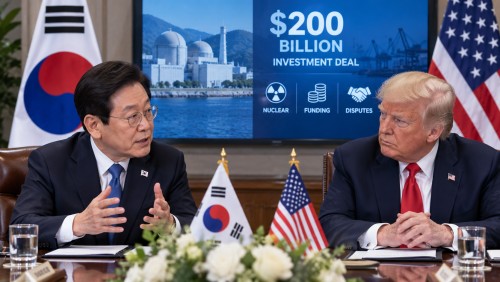
As South Korea and the United States engage in complex negotiations over a significant investment package, major disagreements persist that threaten the finalization of the agreement. At the heart of the issue is a $200 billion investment commitment from Seoul, with a substantial portion earmarked for nuclear projects in the U.S. However, the two countries are currently struggling to bridge gaps on reactor designs, funding schedules, and investment risks.
The discussions have become increasingly intricate, particularly regarding nuclear power projects. The tentative plan involves the construction of eight nuclear reactors in the United States, with six using Westinghouse’s AP1000 design and two based on South Korea’s APR1400 technology. This aspect of the deal could see South Korea invest around $120 billion in nuclear-related initiatives. However, U.S. officials and Westinghouse are reportedly resistant to incorporating the Korean-designed APR1400 reactors, which has stalled progress.
Further complicating the negotiations is South Korea’s desire for a 15% to 20% stake in Westinghouse, including voting rights and a board seat. In contrast, Westinghouse prefers to limit South Korea’s ownership to below 10%. This dispute over corporate control adds another layer of difficulty in reaching a consensus.
Beyond nuclear projects, other potential areas of collaboration are under discussion, including South Korea’s participation in a U.S. project for processing spent nuclear fuel and a proposed liquefied natural gas project in Alaska. Concerns about construction costs and long-term returns are influencing Seoul’s decision-making process in these ventures.
Funding schedules have also become a contentious topic. The U.S. has requested over $9 billion from South Korea by the end of the year, whereas South Korea had initially proposed a smaller upfront payment in 2026, with increased investments commencing in 2027. Moreover, the two countries are at odds over how to calculate investment returns and losses, with South Korea advocating for a system where profits from successful projects offset losses from unsuccessful ones. The U.S. prefers a project-by-project accounting approach, leading to further complications.
Despite the hurdles, both nations remain engaged in negotiations, seeking a resolution that satisfies all stakeholders. South Korea’s Industry Ministry has emphasized that the specifics of the projects, funding structures, and investment arrangements are still under discussion, with no final decisions yet reached.