
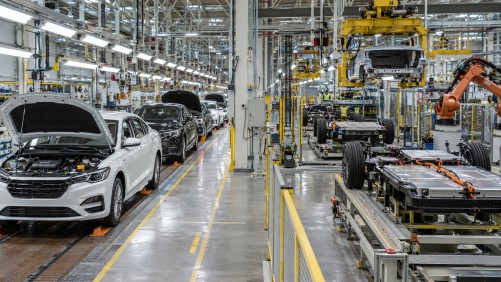
Nissan, the Japanese automaker, is responding to a seismic shift in China’s automotive market by scaling back its petrol car production and bolstering its electric and hybrid offerings. This strategic pivot comes as demand for cleaner vehicles intensifies, outpacing expectations in the world’s largest automotive market.
The company has adjusted its annual sales forecast downward, now projecting between 2.97 million and 3 million units, a reduction from the previous estimate of 3.15 million. This adjustment reflects both a decline in demand and the heightened competition Nissan faces within China. Notably, the company’s sales in the country have plummeted by 32% over the first nine months of the year.
Nissan’s CEO, Ivan Espinosa, acknowledges the rapid consumer shift towards electric and new-energy vehicles as a formidable challenge. In response, Nissan plans to reduce its local petrol vehicle production while increasing exports and expanding its lineup of battery-powered and plug-in hybrid vehicles under the N series.
Compounding Nissan’s challenges is the competition from local Chinese electric vehicle manufacturers. These companies, benefiting from strong government support, are aggressively challenging market share through competitive pricing strategies.
While Nissan grapples with these issues in China, the company reports stronger sales in Japan and North America, regions where the transition to electric vehicles has been more gradual.
This situation underscores the broader challenges facing global automakers as they adapt their production strategies to align with a shifting consumer preference towards electric vehicles, especially in China, where domestic brands are rapidly gaining ground.