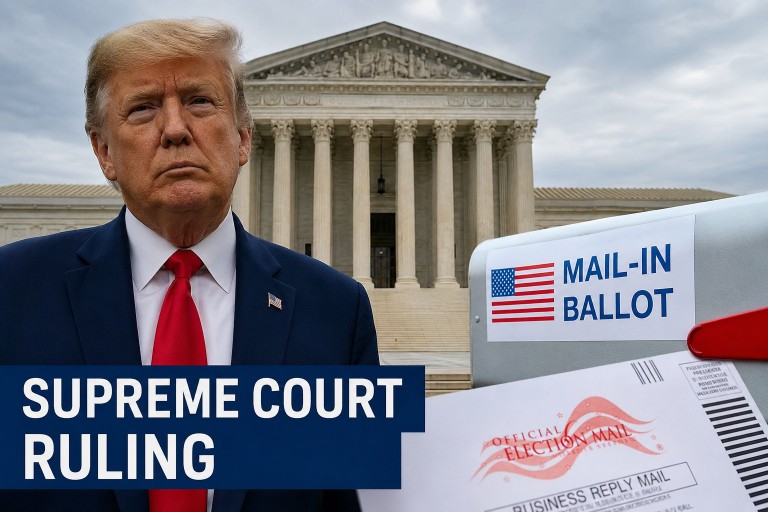
The U.S. Supreme Court has given the Trump administration the green light to proceed with certain elements of its executive order concerning mail-in voting by lifting an injunction previously imposed by a lower court. In a 6-3 decision, the justices removed the injunction that had halted the order’s implementation, although a different nationwide injunction is still in effect, and additional legal scrutiny is anticipated. The court emphasized that this ruling does not confirm the legality of future actions under the order.
Trump’s executive order mandates the creation of a citizenship list of eligible voters and introduces measures aimed at regulating mail-in ballots and enforcing federal election laws. Several states led by Democrats have contested the order, contending that the Constitution assigns primary responsibility for election procedures to states and Congress. They argue that changes to election processes, especially so close to the November midterm elections, could interfere with voting preparations and potentially hinder voter access.
The Supreme Court’s decision enables the Trump administration to continue formulating its policies amid ongoing legal disputes over the executive order. While the court’s ruling lifts one key roadblock, it leaves the door open for further legal challenges that could impact the order’s implementation.
Critics of the executive order have voiced concerns that altering election protocols at this juncture could lead to confusion and logistical challenges as election officials prepare for the upcoming elections. The contention centers around the potential for the order to disrupt established voting procedures and the balance of power between federal oversight and state autonomy in elections.
As the legal battle unfolds, the administration’s ability to fully implement its envisioned changes remains uncertain, with both sides preparing for an extended legal confrontation over the scope and authority of the executive order. The outcome of this legal tussle could have significant implications for how mail-in voting and other election-related processes are managed in the future.