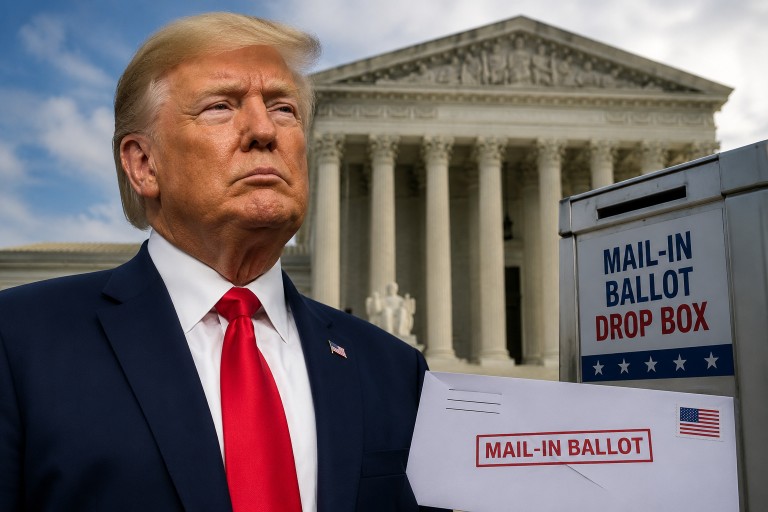
The US Supreme Court has given a temporary green light to parts of the Trump administration’s initiative to tighten mail-in voting regulations ahead of the November 2026 midterm elections. In a 6-3 decision, the court’s conservative majority lifted an injunction that had previously blocked President Donald Trump’s executive order. Despite this ruling, another injunction remains in effect, leaving the administration’s full implementation of the order subject to continued legal challenges.
Issued in March, Trump’s executive order mandates the federal government to compile a list of eligible voters based on citizenship status and restricts mail-in ballots to individuals on that list. It also seeks to increase federal oversight of state and local election officials regarding voter eligibility. Democratic officials from 23 states and Washington, DC, opposed the order, contending that the Constitution delegates authority over election administration to states and Congress. They further cautioned that significant changes so close to the election might disrupt preparations and disenfranchise eligible voters.
A Massachusetts judge initially blocked the executive order, arguing that the president lacks the authority to dictate state administration of federal elections. This decision was upheld by an appeals court, and a subsequent nationwide injunction continues to pose a barrier. The Supreme Court’s decision to lift the first injunction does not guarantee the legality of every action taken by the Trump administration to enforce the order, leaving room for the remaining legal challenges to determine the extent of its enactment.
Democratic leaders and voting-rights advocates have sharply criticized the Supreme Court’s ruling, expressing concerns that the measures could sow confusion and complicate the voting process for eligible voters. California and other states are preparing additional legal battles in response. This legal conflict unfolds with less than 100 days until the midterm elections, where voters will decide the balance of power in the US House of Representatives and Senate. Mail-in voting, a significant component of the US electoral system, saw about 30% of ballots submitted this way during the 2024 presidential election.
President Trump has consistently raised doubts about the security of mail-in voting and has advocated for broader amendments to election rules as part of his administration’s policy agenda. The ongoing legal tussles and the Supreme Court’s involvement reflect the contentious atmosphere surrounding election procedures and voter access as the nation approaches another critical electoral milestone.