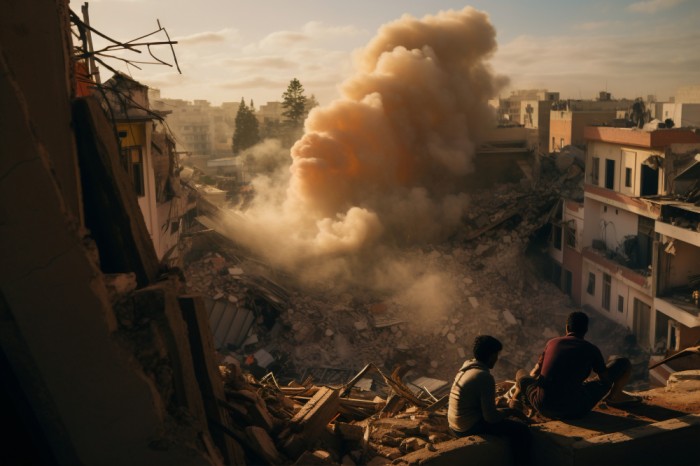
Escalating tensions between the United States and Iran have sparked fears of a broader conflict in the Gulf region following a series of new military strikes by both nations. The United States launched attacks on Iranian targets, including air defense systems, drone facilities, and surveillance setups, as a reaction to an incident involving a commercial vessel in the strategically crucial Strait of Hormuz. According to U.S. military officials, these actions were intended as a countermeasure to neutralize perceived Iranian threats in the area.
In retaliation, Iran’s Islamic Revolutionary Guard Corps executed missile and drone assaults on military installations linked to the United States in Kuwait and Bahrain. Iran claimed to have successfully hit several targets, including a U.S. air base in Kuwait and a naval facility in Bahrain, though these assertions have yet to be independently verified. Following these developments, both Kuwait and Bahrain reported heightened security alerts, activating their defense systems and advising residents to relocate to safer areas.
The reciprocal attacks have heightened concerns that the tentative ceasefire between Washington and Tehran might unravel. This latest exchange of strikes represents another significant flashpoint following earlier U.S. military actions against Iranian sites, which were also tied to disputes surrounding the Strait of Hormuz. This narrow waterway is vital for global energy transport and has frequently been at the heart of U.S.-Iranian tensions.
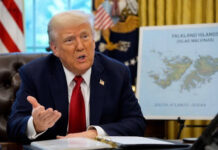
U.S. President Donald Trump has accused Iran of breaching the ceasefire agreement and issued a stern warning that further military responses could ensue if the situation continues to deteriorate. Conversely, Iran has pointed the finger at Washington, accusing it of escalating hostilities and violating past agreements. As both nations exchange accusations and military strikes, the prospect of further instability in the region looms large.