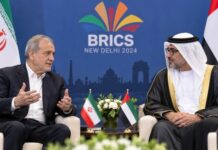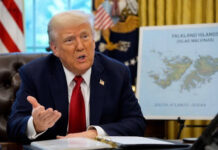
The United States and Iran have successfully negotiated a peace agreement intended to cease nearly four months of hostilities in the Middle East. Officials from both nations have confirmed the deal, which stipulates an immediate cessation of military activities across all conflict zones, including Lebanon. In an announcement, US President Donald Trump stated that the Strait of Hormuz, a vital conduit for global shipping, will be reopened as part of this accord. This development is anticipated to facilitate the resumption of international oil shipments, potentially alleviating stress on global energy markets. Nevertheless, conflicting statements from the involved parties suggest uncertainty about the exact timing for fully restoring access to this crucial waterway.
The agreement outlines plans for a formal signing ceremony, scheduled to occur in Geneva on June 19. Key elements of the deal include the lifting of US naval restrictions and steps to reinstate commercial shipping through the Strait of Hormuz. The arrangement is also poised to enhance Iran’s access to international oil markets, which could provide much-needed support to its ailing economy. While the current agreement addresses immediate military concerns, complex issues such as Iran’s nuclear program are set to be tackled during a 60-day negotiation window intended to culminate in a more comprehensive accord.
This diplomatic breakthrough arrives amidst heightened tensions in Lebanon, where recent Israeli military actions have cast a shadow over the stability of ongoing discussions. Iran has been adamant that any peace deal should encompass all regional conflicts, including the situation involving Hezbollah in Lebanon. Despite the promising nature of the agreement, analysts advise caution, noting that resolving deep-seated disputes within the proposed timeframe may prove challenging. Additionally, regional security matters, such as Iran’s missile initiatives and backing of allied groups in the Middle East, remain sources of concern.
The reopening of the Strait of Hormuz is expected to have positive ramifications for global energy markets. However, experts caution that reinstating regular shipping operations and repairing infrastructure damaged by conflict may take several months. This peace framework, while an essential step forward, is only the beginning of a complex process aimed at securing long-term stability in the region.