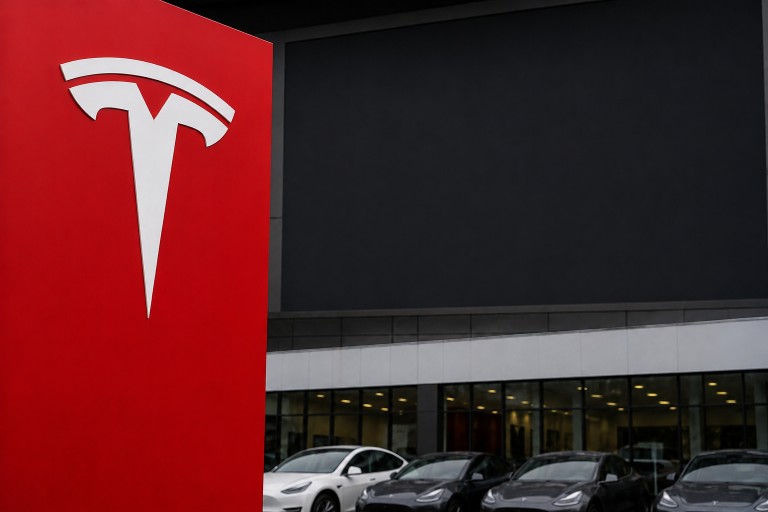
Tesla’s latest financial results revealed disappointing earnings for the second quarter, with profits falling short of Wall Street’s forecasts, despite revenue exceeding expectations. The company’s shares dropped over 3% during after-hours trading in response to this news. Tesla reported earnings of 31 cents per share, which was below the anticipated 51 cents per share that analysts had projected. However, the company’s revenue reached $28.23 billion, surpassing the forecasted $25.71 billion.
This year, Tesla’s stock has experienced a decline of approximately 14%. The company is contending with mounting competition from more affordable Chinese electric vehicle manufacturers and the repercussions of the expiration of U.S. electric vehicle tax incentives. Despite vehicle sales remaining a crucial aspect of its business, Tesla is increasingly concentrating on its ventures in artificial intelligence, robotics, autonomous driving, and the development of its Robotaxi service.
CEO Elon Musk has emphasized the long-term potential of the Optimus humanoid robot, suggesting it could eventually become Tesla’s most significant product. Nonetheless, he acknowledged the considerable technical and manufacturing challenges that must be overcome before the robot can be produced on a large scale. Meanwhile, Tesla is broadening its Robotaxi service by including Tampa and Orlando as part of its operational areas. This autonomous ride-hailing service is already available in selected regions of Austin, Dallas, Houston, and Miami.
Musk stated that the expansion of the Robotaxi service is proceeding cautiously, with a focus on ensuring safety and avoiding incidents that could attract regulatory scrutiny. Currently, about 50 Robotaxis are operational in Austin, where the service was initially launched. The deliberate pace of the rollout reflects Tesla’s commitment to maintaining high safety standards as it navigates the complexities of autonomous vehicle technology.