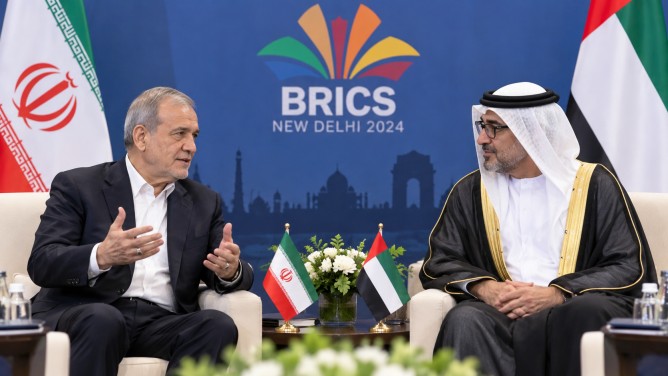
In a bid to mend and enhance relations, Iranian President Masoud Pezeshkian and Abu Dhabi Crown Prince Khaled bin Mohamed held a significant meeting during the BRICS Summit in New Delhi. President Pezeshkian expressed optimism about the discussions, noting that both Iran and the United Arab Emirates aim to set aside past disputes and focus on future cooperation. This diplomatic engagement comes at a critical time as the region grapples with ongoing tensions, prompting nations to seek collaborative efforts in areas like security and the management of vital shipping routes.
Furthering regional dialogue, Iran is preparing for a meeting on September 14 in Oman that will include representatives from Gulf countries and Iraq. The agenda will center on enhancing regional security and ensuring safe passage through the Strait of Hormuz, a crucial chokepoint for global energy supplies. However, Bahrain has opted out of participating in these discussions. The meeting represents an opportunity to bolster mutual understanding and foster collective security among neighboring states.
During his address, Pezeshkian emphasized the importance of economic collaboration among BRICS nations. He advocated for increased use of national currencies in trade and the development of improved financial systems to reduce reliance on existing global frameworks, which he argued expose emerging economies to undue political and economic pressures. The Iranian president’s call to action underlined the necessity for BRICS countries to enhance their economic resilience and forge stronger partnerships, specifically opposing unilateral sanctions and assaults on civilian infrastructure.
Pezeshkian also highlighted Iran’s strategic advantages, including its rich energy resources and extensive transit networks, suggesting these could play a pivotal role in linking BRICS economies through new trade and energy corridors. His remarks underscore Iran’s potential contribution to the advancement of economic ties within the bloc, serving as a bridge for enhanced cooperation.
These diplomatic initiatives unfold against the backdrop of heightened tensions in the Strait of Hormuz, underscoring the urgent need for regional dialogue and cooperation to ensure security and stability in energy supply chains. As countries in the region navigate these complex dynamics, the push for improved relations and economic collaboration remains a central theme in the pursuit of regional peace and prosperity.