
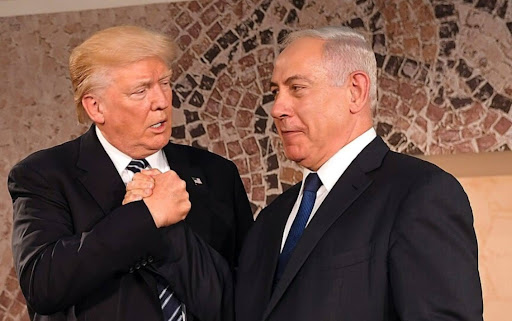
US President Donald Trump struck an unusual tone this week when discussing Israeli Prime Minister Benjamin Netanyahu’s decision to strike Iran’s South Pars gas field: he acknowledged the disagreement clearly, then immediately tried to minimize it. “We get along great,” Trump said, moments after revealing he had told Netanyahu not to carry out the attack. The juxtaposition — open admission followed by reassurance — captured the complexity of a relationship that is simultaneously strong and strained.
The South Pars strike was a major escalation in the ongoing war against Iran. The facility is Iran’s most important energy asset, and its targeting provoked Iranian retaliation against regional energy infrastructure, pushing global prices higher and alarming Gulf allies. Trump’s public acknowledgment that he had opposed the move was unusual — a sitting American president openly second-guessing an allied leader’s military decision during an active conflict is rare.
Netanyahu responded by accepting Trump’s request not to continue striking the gas field, while defending Israel’s right to make the initial decision. He described the relationship with Trump in glowing terms, called him “the leader” and himself the ally, and emphasized their decades of shared concern about Iran. His handling of the situation was designed to close the gap that Trump’s remarks had opened, without actually surrendering the principle of Israeli military independence.
Reports from multiple sources complicated the picture by indicating that Washington had prior knowledge of the strike, despite Trump’s early social media claim to the contrary. US officials worked to reconcile these contradictions by stressing ongoing coordination and distinguishing American strategic interests from Israeli ones. The need for such clarifications indicated that the relationship’s public presentation was smoother than its operational reality.
The strategic divergence between the two leaders — Trump’s focus on nuclear containment versus Netanyahu’s vision of regional transformation — continues to drive these periodic tensions. Director of National Intelligence Tulsi Gabbard acknowledged the divergence in congressional testimony. Trump has backed away from regime-change talk. Netanyahu has not. Whether “we get along great” can bridge that gap indefinitely remains to be seen.