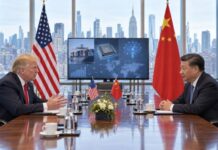
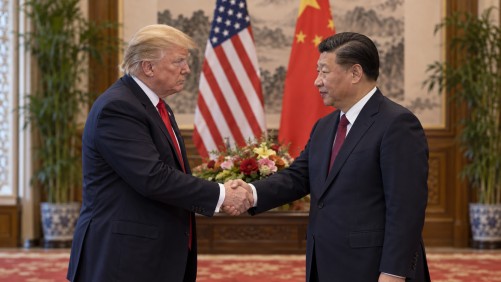
As tensions continue to simmer between the United States and China over a range of geopolitical issues, Presidents Donald Trump and Xi Jinping are preparing for a pivotal meeting on American soil. This high-stakes discussion comes at a time when trade, technology, and territorial disputes remain unresolved, underscoring the complex relationship between the two global powerhouses.
The upcoming meeting marks the second in-person engagement between the leaders this year, yet expectations for significant breakthroughs are tempered by persistent disagreements. Central to these discussions will be the contentious topic of artificial intelligence (AI). Washington has suggested establishing a framework for dialogue on AI safety and governance, highlighting its critical importance. However, differences in perception persist, with the U.S. imposing restrictions on China’s access to advanced semiconductors essential for AI, a move Beijing perceives as an attempt to hinder its technological advancement.
Trade remains another contentious issue, with a temporary trade agreement involving tariffs and Chinese rare-earth export restrictions nearing expiration in November. While Beijing seeks long-term trade stability, the U.S. views existing restrictions as a bargaining chip. This dynamic introduces further complexity to the negotiations, emphasizing the need for a delicate balance in managing economic relations.
Taiwan continues to be a significant point of discord. The U.S. has long maintained defense ties with Taiwan, a stance that China opposes, seeing the island as part of its territory. The prospect of future U.S. arms sales to Taiwan could further strain relations, making it a likely topic of discussion during the meeting.
Beyond bilateral issues, Trump and Xi are also expected to address broader international concerns. Both nations have vested interests in the conflicts involving Iran and Ukraine, with China maintaining strong economic ties with Iran and a close relationship with Russia. As the two countries navigate their strategic rivalry, maintaining open lines of communication on these global matters remains crucial for international stability.