
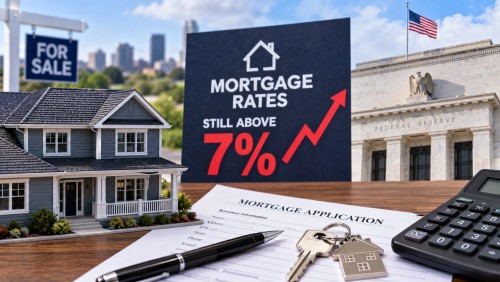
The landscape of the U.S. housing market continues to grapple with high borrowing costs as mortgage rates persist above 7%. This development follows the Federal Reserve’s recent decision to raise its target interest-rate range to 3.75%–4%, aimed at curbing inflation that remains well above the central bank’s 2% target.
Although the Federal Reserve’s rate adjustments influence economic conditions, mortgage rates are not directly tied to these changes. Instead, they are affected by a combination of factors including financial markets, inflation expectations, and investor demand. As a result, the recent hike by the Fed does not necessarily mean a proportional increase in mortgage rates.
As of September 17, 2026, the average rate for a 30-year fixed mortgage in the U.S. stood at 7.37%, a significant rise from 5.75% recorded in March. Meanwhile, the average rate for a 15-year mortgage was 6.62%. These elevated rates have led to increased monthly payments for many homebuyers, posing additional challenges in an already competitive housing market.
Despite these challenges, potential homebuyers may still find opportunities to secure rates below the national average. Factors such as credit scores, down payments, lender choices, and loan terms can influence the final rate offered. Additionally, paying mortgage points upfront may lower the interest rate, though it increases closing costs. Adjustable-rate mortgages present another option, albeit with the risk of future rate changes after the initial fixed period.
The cost of refinancing has also risen, with the average 30-year refinance rate reaching 7.41% and the 15-year refinance rate at 6.75% as of mid-September. This has made refinancing less appealing for homeowners locked into lower rates, unless the long-term savings outweigh the refinancing expenses.
Looking ahead, the trajectory of mortgage rates will hinge on various economic factors, including inflation trends, financial market movements, and future decisions by the Federal Reserve. While some may hope for rates to decrease, there is no certainty that waiting will lead to more favorable borrowing conditions.