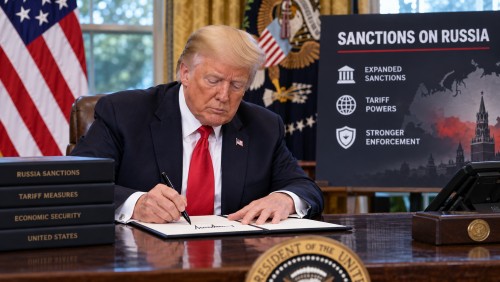
In the midst of ongoing geopolitical tensions, the United States has reinforced its economic stance against Russia by expanding sanctions aimed at curbing Moscow’s financial and military capabilities. This legislative move, recently signed into law by President Donald Trump, not only strengthens existing measures against Russia but also extends sanctions on Iran, positioning the U.S. to exert further pressure on international energy markets.
The newly enacted law targets Russian officials and financial networks closely tied to the country’s war efforts. A significant component of the legislation is its focus on limiting Russia’s income from oil and gas exports, a vital revenue stream for the nation. This initiative is part of a broader strategy to leverage economic sanctions as a tool for influencing Russia’s international behavior.
Under this expanded legal framework, the president now has the authority to impose tariffs of up to 100% on nations that continue to purchase Russian energy. This provision grants the administration considerable discretion in choosing which countries to target, with the potential to impact major energy consumers such as India and China, depending on future policy decisions.
The legislation, which passed with bipartisan support in the House of Representatives, underscores a unified legislative intent to strengthen the U.S. position against Russian economic activities. The White House emphasized that the law not only enhances sanctions against Russia but also ensures that existing sanctions on Iran remain in place, further consolidating U.S. foreign policy objectives.
As the global community watches the implementation of these sanctions, the law’s impact will likely resonate across international economic and diplomatic landscapes. By broadening the scope of sanctions and tariff authorities, the U.S. administration gains additional leverage in its efforts to deter countries from engaging economically with Russia, potentially reshaping energy trade dynamics worldwide.