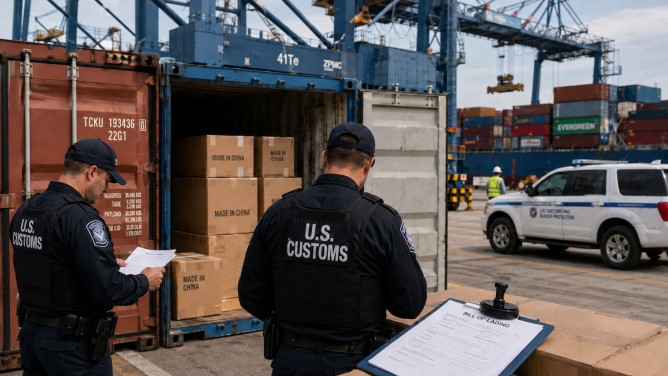
The United States has launched accusations against 38 countries along with the European Union, claiming they are part of a “shadow transshipment network.” This network allegedly facilitates the entry of Chinese goods, which are subject to high US tariffs, into the American market via third-party countries. This practice, the US argues, undermines the integrity of its tariff system.
A detailed report titled “The Great Transshipment Scam” claims that this potentially illegal process could be valued at approximately $60 billion. The report suggests that this transshipment activity has led to significant losses in US tariff revenue. The nations and regions implicated in this network include a diverse array of countries from different continents, such as India, Canada, the European Union, Israel, Japan, Mexico, South Korea, Taiwan, Brazil, Indonesia, Malaysia, Thailand, Turkey, Vietnam, Argentina, Azerbaijan, Bangladesh, and many others, totaling 38 in all.
The report estimates that in 2025, around $67 billion worth of goods destined for the US were allegedly rerouted from China through major transit points like Mexico, India, and Vietnam. This activity is believed to have resulted in roughly $28 billion in lost tariff revenue for the United States. Such losses have reportedly prompted the US to consider several countermeasures, including tougher inspections, new tariffs, sanctions, and possibly restricting market access for countries that are seen as aiding in tariff evasion.
Specifically, the report points to the Pune-Gujarat-Chennai corridor in India. It alleges that Chinese shipments of products, including electric pumps and compressors, have been beneficial to businesses located in this region. However, they have also intensified competitive pressures on manufacturers within the United States, highlighting the broader economic implications of these transshipment activities.
In response to these findings, the US is contemplating a series of actions aimed at curbing these practices. Proposed measures involve implementing stricter inspections and interdiction processes, imposing additional tariffs, and possibly enacting sanctions. Furthermore, the US may consider limiting market access for countries that are complicit in facilitating tariff evasion, signaling a robust stance against what it perceives as unfair trade practices.