
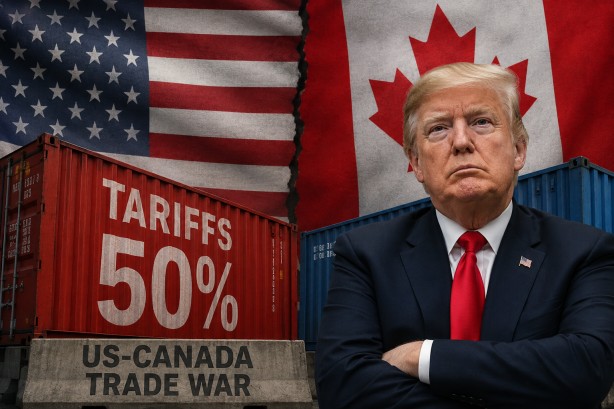
The trade tensions between the United States and Canada have intensified as President Donald Trump announced hefty tariffs on Canadian imports. After negotiations faltered in Washington, the U.S. decided to impose a 50% tariff on approximately $20 billion worth of goods from Canada. The targeted items include hockey sticks and medical supplies, among others.
Canadian Prime Minister Mark Carney has pledged to counter these tariffs with equivalent measures, stating that Canada plans to implement retaliatory tariffs on U.S. products starting September 8. Carney has characterized the U.S. tariffs as a direct assault on Canada, firmly rejecting the terms presented during the recent discussions.
Jamieson Greer, the U.S. Trade Representative, justified the imposition of these tariffs as a necessary step to safeguard American workers and maintain the integrity of supply chains. However, this move has sparked apprehension about the stability of the United States-Mexico-Canada Agreement (USMCA), a trade pact that governs around $2 trillion in annual commerce among the three nations.
As the dispute escalates, there are growing concerns about the potential economic repercussions. Businesses and consumers might face increased costs, and the already delicate economic ties between the U.S. and Canada could experience further strain.