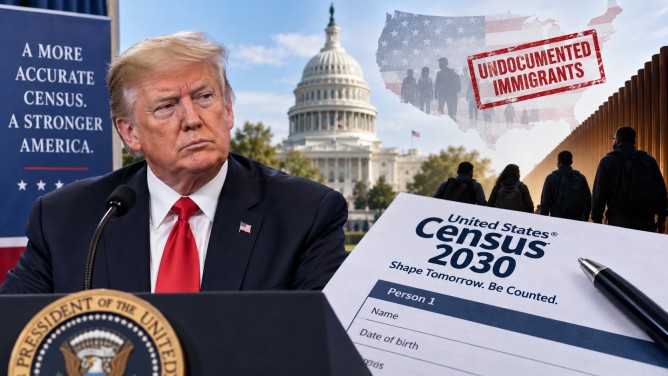
The Trump administration has put forward a proposal to alter the U.S. census by excluding undocumented immigrants from the population count. This change could potentially have a major impact on how federal resources are distributed and influence the redrawing of congressional districts. Under this plan, lawful permanent residents would remain included in the census count, while undocumented immigrants and certain other non-permanent immigration categories might be left out. To determine the legal status of individuals counted, the Census Bureau is considering utilizing government administrative records.
Historically, the U.S. census, conducted every decade, has aimed to include all individuals residing in the country, irrespective of their citizenship or immigration status. The data collected from the census plays a crucial role in determining the allocation of federal funding and the number of seats each state is allocated in the House of Representatives. Any alteration to who is counted could therefore significantly shift these allocations.
Alongside these proposed changes, the administration is also reviewing the questions related to race and ethnicity within the census. They cite concerns about the relevance and sensitivity of this information, suggesting that modifications could impact the demographic data utilized by governments and policymakers.
This proposed alteration to the census is likely to face legal opposition, particularly from Democrats and advocacy groups. These opponents argue that the U.S. Constitution mandates the census to account for all individuals living within the United States, regardless of their immigration status, and believe that excluding undocumented immigrants would be unconstitutional.