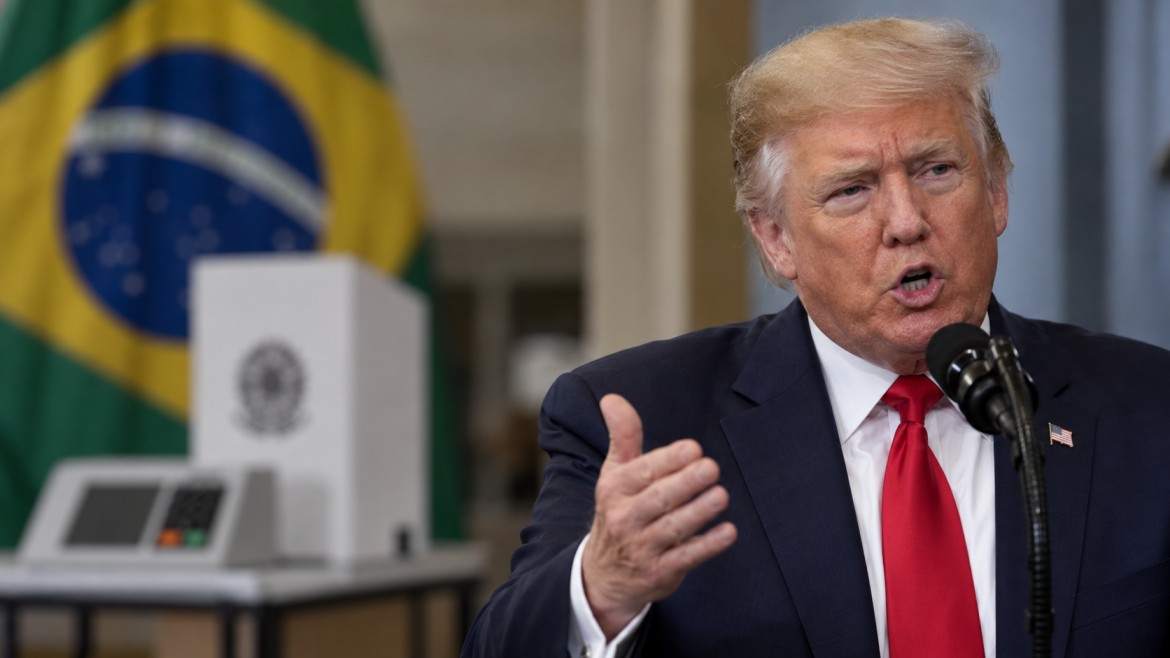
Recent remarks by former U.S. President Donald Trump have stirred controversy as he questioned the legitimacy of Brazil’s presidential election. Speaking at Joint Base Andrews in Maryland on October 26, Trump labeled the election as “rigged” without providing any supporting evidence. His comments followed the victory of leftist Luiz Inácio Lula da Silva, who claimed a fourth term in a political comeback against right-wing contender Flávio Bolsonaro.
Trump’s assertions have cast a shadow over Brazil’s democratic process, despite his lack of formal endorsement for any candidate during the campaign. He had, however, previously voiced support for former Brazilian President Jair Bolsonaro, maintaining ties with the broader MAGA movement. Trump emphasized that his primary focus remains on U.S. governance, distancing himself from taking responsibility for the outcome of the Brazilian election.
In the aftermath of Lula’s victory, Bolsonaro refused to concede, seeking to annul the election results. Despite this, a Brazilian official expressed confidence that the United States would acknowledge Lula’s win, highlighting the difficulty in disputing the election outcome. Some of Trump’s allies have advocated for a stronger stance against Brazil, including the suspension of diplomatic relations.
Lula celebrated his victory in São Paulo, declaring it a landmark moment for Brazilian democracy. He pledged that dictatorship and fascism would not resurface, underscoring the significance of democratic institutions and political stability. Lula’s win has fortified his political standing, as he navigates potential tensions with the Trump administration over trade and diplomatic issues.
The ongoing dispute surrounding the election underscores possible strains in the relationship between Washington and Brasília. As Lula embarks on his new term, both governments face challenges in addressing differences over trade, diplomacy, and regional politics.