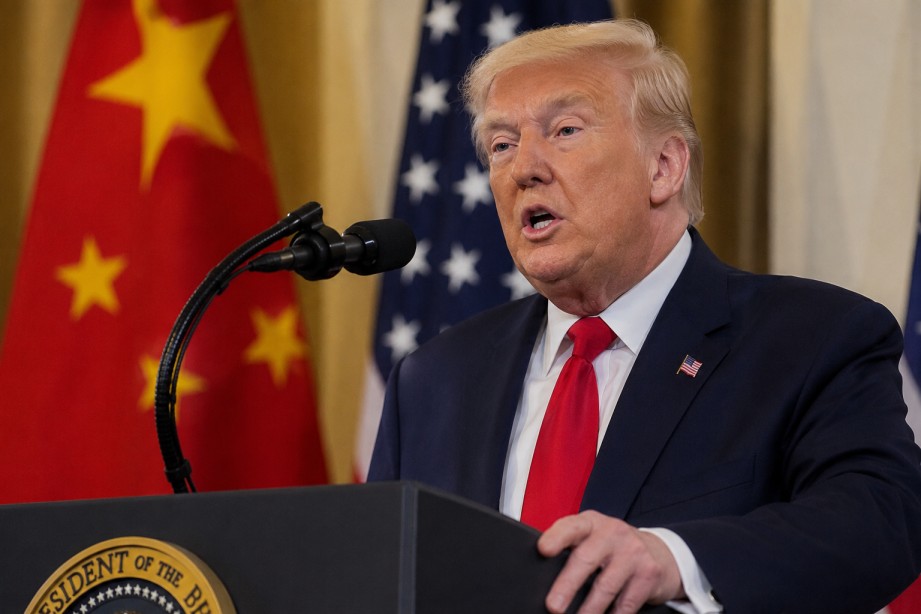
In a recent address, former US President Donald Trump has once again accused China of interfering in the 2020 US presidential election. He announced that he would declassify intelligence documents and instructed federal agencies to scrutinize what he described as hidden vulnerabilities in the election’s security. Trump’s claims centered on a lack of public confidence in the US electoral system, and he called on the Department of Justice, FBI, CIA, and the Office of the Director of National Intelligence to thoroughly examine the intelligence handling concerning the 2020 election. Additionally, he urged Congress to enact more stringent voter identification laws.
Democratic leaders have dismissed Trump’s allegations, maintaining that numerous investigations, intelligence assessments, legal reviews, audits, and recounts have consistently found no evidence of foreign interference impacting the results of the 2020 election. Critics have suggested that Trump’s assertions might be an attempt to sow doubt and undermine public confidence in the electoral process ahead of the upcoming congressional midterm elections.
China has also refuted Trump’s allegations, reaffirming its longstanding policy of non-interference in the domestic matters of other nations. This denial aligns with a US intelligence assessment released in 2021, which concluded that no foreign entity, including China, had manipulated the technical components of the 2020 US voting process.
The narrative surrounding the integrity of the 2020 election has been a focal point of political discourse, with Trump and his supporters continuing to challenge its legitimacy despite evidence to the contrary. The ongoing debate underscores a broader concern about election security and public trust in democratic institutions in the United States.