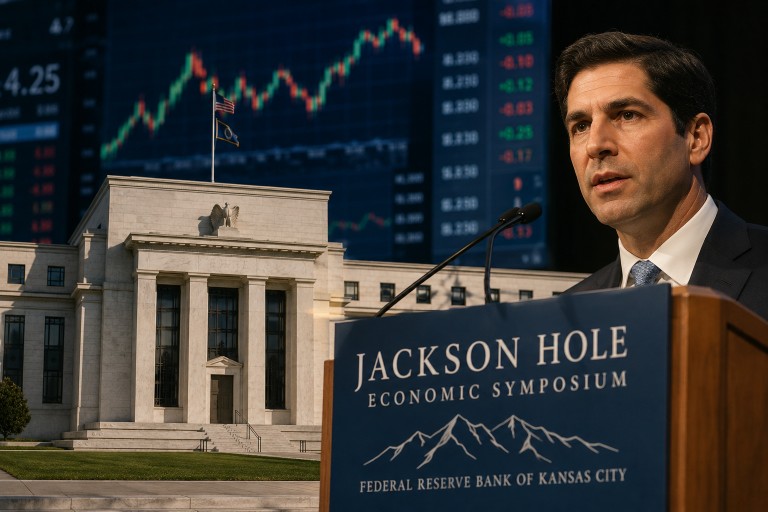
As investors eagerly anticipate US Federal Reserve Chair Kevin Warsh’s speech at the upcoming Jackson Hole economic symposium, they are seeking insights on a variety of critical issues, including interest rates, inflation, and the implications of rising Treasury yields on monetary policy. Warsh’s recent shift away from detailed forward guidance has prompted investors to pay closer attention to market signals, which has, in turn, heightened uncertainty about the Federal Reserve’s strategy for tackling inflation that still hovers above the 2% target.
The landscape of financial markets has grown more complex with the increase in long-term Treasury yields, a development that some investors argue is already tightening financial conditions. This scenario raises the possibility that the Federal Reserve might reconsider further interest rate hikes. The complexity of the situation has been further amplified by the US Treasury’s decision to ramp up buybacks of long-dated bonds following a notable sell-off. Although officials have indicated that the move was designed to bolster market liquidity, investors have interpreted it as an attempt to alleviate pressure on long-term borrowing costs.
In light of these developments, there is a growing demand for Warsh to provide a more definitive stance on how the Federal Reserve plans to steer inflation back down to its 2% target, as well as whether additional rate hikes are on the horizon. His address at Jackson Hole is expected to be pivotal, with market participants keenly watching for any indications of the Federal Reserve’s future monetary policy direction and its interplay with the bond market’s condition.
Warsh’s approach of reducing reliance on explicit forward guidance has shifted the focus towards interpreting market trends, making his upcoming speech a crucial moment for investors seeking clarity in an uncertain economic climate. As they await his insights, the relationship between bond market dynamics and Federal Reserve policy decisions remains a central concern, influencing expectations and strategic planning in financial markets.