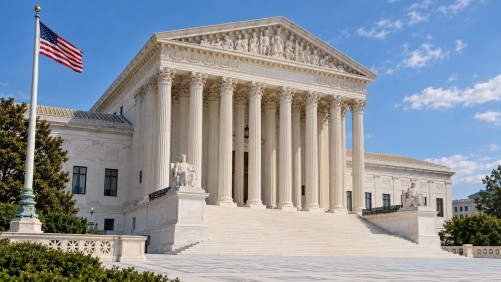
The US Supreme Court has temporarily supported the Trump administration in a legal battle over political advertising rates, halting a lower court’s decision that required the Federal Communications Commission (FCC) to address objections to a new policy before the upcoming November midterm elections. On October 8, the Supreme Court justices suspended the 4th US Circuit Court of Appeals’ deadline, which had instructed the FCC to make a decision within two days. The court also requested a response from Democrats by October 10 regarding the administration’s appeal.
The controversy revolves around a policy introduced by the FCC in March, which extends the legally required lowest advertising rates to political party advertisements that are coordinated with candidates. Previously, this benefit was limited to advertisements paid for directly by candidates. The policy has been contested by four Democratic candidates in competitive House and Senate races, including Georgia Senator Jon Ossoff. They argue against the FCC’s interpretation and sought court intervention ahead of the elections.
The appeals court had criticized the FCC for delaying its decision on the Democrats’ objections, arguing that the agency’s inaction could prevent judicial review of the policy before voters head to the polls. However, the Justice Department defended the FCC, stating that the agency was still collecting public comments and that a delay during the election season was justified.
Previously, in September, the Supreme Court ruled that the appeals court could not block the policy before the FCC completed its internal review. The current order temporarily prevents the lower court’s deadline from being enforced while the justices consider the administration’s appeal.
This case holds potential financial consequences for congressional campaigns, as political committees linked to Republicans have reportedly raised more funds than Democratic party committees. Access to lower advertising rates could significantly impact campaign spending in tightly contested races.