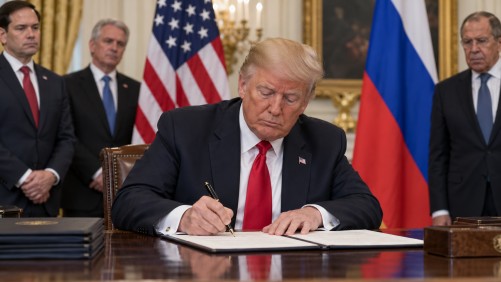
In a significant policy decision, President Donald Trump has opted to waive key sanctions and tariffs against Russia, which were poised to take effect under the recently signed Lindsey O. Graham Sanctioning Russia and Iran Act of 2026. Announced through an executive order last Friday, Trump justified the waiver as serving the national interests of the United States.
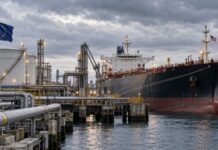
The legislation was initially crafted to exert economic pressure on Moscow in response to its ongoing invasion of Ukraine. It authorized the imposition of tariffs as high as 100% on imports from major buyers of Russian oil and natural gas, along with penalties aimed at countries assisting Russia in circumventing existing sanctions.
According to the executive order, the waiver will persist until Trump or another authorized official deems further action necessary. The law permits the president to suspend these sanctions by informing Congress that doing so aligns with the nation’s interests.
This decision emerges amidst increasing criticism of Trump’s approach to Russia and the Ukraine conflict. His administration’s warmer engagement with Moscow and public disagreements with Ukrainian President Volodymyr Zelenskyy have drawn scrutiny. Moreover, the proposed sanctions had elicited concerns from major Russian oil purchasers like China and India, who feared additional US restrictions could adversely affect international trade and bilateral relations.
Democratic lawmakers have expressed disapproval of the waiver, arguing that it undermines efforts to hold Russia accountable for its aggression in Ukraine. Supporters of the sanctions believed the measures would curtail Moscow’s energy revenues and restrict its access to international markets.
The decision follows controversy surrounding a separate diesel supply arrangement with Russia, which Trump defended as a strategy to boost fuel supplies and stabilize global energy prices. Critics, however, have raised concerns that the agreement might inadvertently enhance revenue streams for Moscow.
As Washington navigates the complexities of pressuring Russia while considering energy costs and international economic relations, the suspension leaves uncertainty over the future implementation of the proposed sanctions and tariffs.