
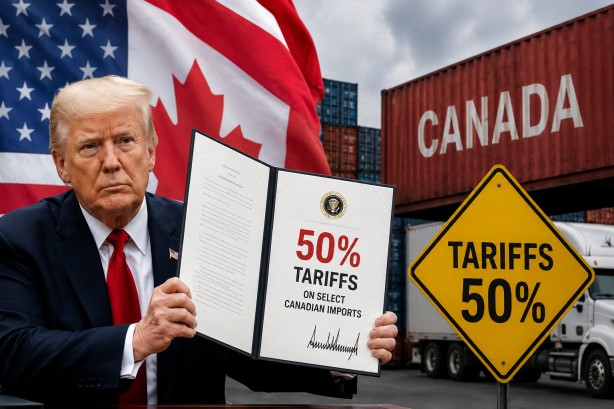
President Donald Trump has sanctioned a 50% tariff increase on certain Canadian imports, asserting that the move is a response to perceived inequitable treatment of American goods by Canada. This latest round of tariffs focuses on products such as automotive materials, dairy products, and alcoholic beverages, implemented through a series of executive orders amid the ongoing trade negotiations under the United States-Mexico-Canada Agreement (USMCA).
The Trump administration argues that these new tariffs are a necessary measure to counteract what it considers to be unfair trade practices that negatively impact U.S. industries. According to officials, these tariffs are designed to level the playing field for American businesses that have been disadvantaged by Canada’s trade policies.
This decision comes as trade talks between Washington and Ottawa continue, with the tariffs poised to intensify discussions surrounding trade and market access between the two countries. The U.S. move aims to exert additional pressure on Canadian negotiators to address and rectify issues that the Trump administration claims are detrimental to American economic interests.
The imposition of these tariffs could potentially escalate economic tensions between the United States and Canada. Both American and Canadian businesses, particularly exporters, are watching closely to gauge Canada’s response and to assess the broader implications for trade across North America. The impact of these tariffs is expected to reverberate through the economies of both nations as they navigate this complex trade landscape.