
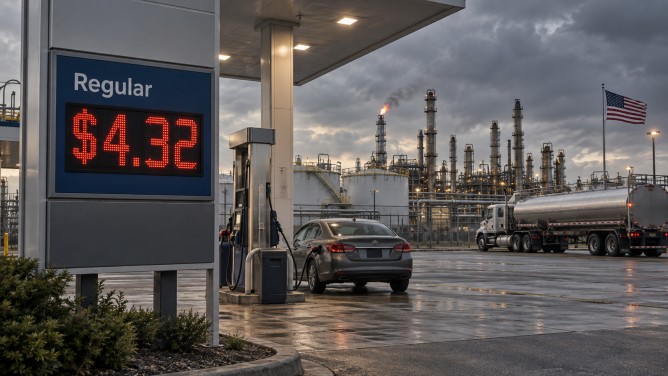
As global tensions and oil supply concerns continue to ripple through energy markets, the United States is experiencing a notable rise in gasoline prices. The average price for regular gasoline has surged to $4.32 per gallon, representing a significant increase in recent weeks. This development is primarily driven by uncertainties in the global crude oil market, influenced by ongoing geopolitical issues involving the Middle East, Iran, and the conflict between Russia and Ukraine.
According to the US Energy Information Administration’s latest weekly data, gasoline prices have risen by nearly 25 cents over a two-week period. Comparatively, this marks a stark difference from the same period last year when the average price was approximately $3.18 per gallon. The increase in fuel costs is further compounded by record-high diesel prices, which are contributing to elevated transportation and shipping expenses.
Typically, gasoline prices tend to decline during the fall as US refineries transition from producing summer-grade fuel to the less expensive winter-grade formulations. However, analysts suggest that the usual seasonal drop may be mitigated this year due to persistent geopolitical risks, which could sustain higher price levels.
Adding to the complexity, the US Strategic Petroleum Reserve has seen its emergency oil stocks diminish following substantial withdrawals in previous years. This reduction in reserves could limit the government’s capability to counteract significant supply disruptions in the future.
Energy experts anticipate continued volatility in fuel prices as the situation in the Middle East and the Russia-Ukraine conflict evolve, impacting global oil markets. While there may be potential for a seasonal decrease in gasoline prices, ongoing supply chain risks are likely to keep costs elevated, affecting consumers and businesses alike.