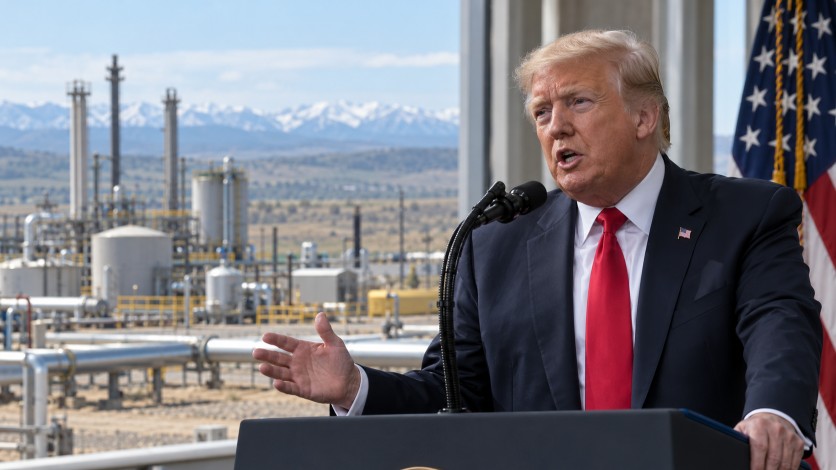
In a move that has sparked a heated debate between environmentalists and energy proponents, former U.S. President Donald Trump announced plans to dismantle Biden-era methane emissions regulations. This announcement was made during a rally in Lubbock, Texas, where Trump argued that the rollback would reduce costs for energy producers and consumers, claiming potential savings of $45 billion and an increase of 210 million barrels of oil.
The Environmental Protection Agency (EPA), under the leadership of Administrator Lee Zeldin, is tasked with revising the current regulations which govern emissions from oil and natural gas operations as per the Clean Air Act. The proposed changes are anticipated to facilitate the production of approximately 1.41 trillion cubic feet of additional natural gas, according to the agency.
The initiative to repeal the 2024 regulations, which mandated a nationwide effort to reduce methane emissions from existing oil and gas facilities, has drawn criticism from environmental and public health organizations. These critics caution that loosening methane controls could exacerbate pollution, degrade air quality, and accelerate climate change, as methane is a potent greenhouse gas.
Methane emissions can occur during leaks, venting, and flaring in oil and gas operations, which also release other hazardous pollutants such as volatile organic compounds, benzene, and formaldehyde. The existing regulations include measures to limit these emissions and established a monitoring program to detect and address major emissions events.
The Trump administration’s reconsideration of these regulations, initiated in March 2025, is framed as a strategy to boost domestic energy production and maintain U.S. energy competitiveness. Proponents argue that reducing regulatory burdens could spur increased oil and gas output, while opponents warn of the potential for increased environmental and health risks to nearby communities.
This ongoing debate underscores the tension between the goals of expanding fossil fuel production and mitigating greenhouse gas emissions. The ultimate impact of the proposed regulatory changes will depend on the final rules adopted and their subsequent implementation.