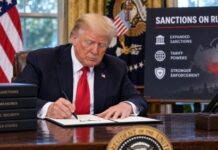
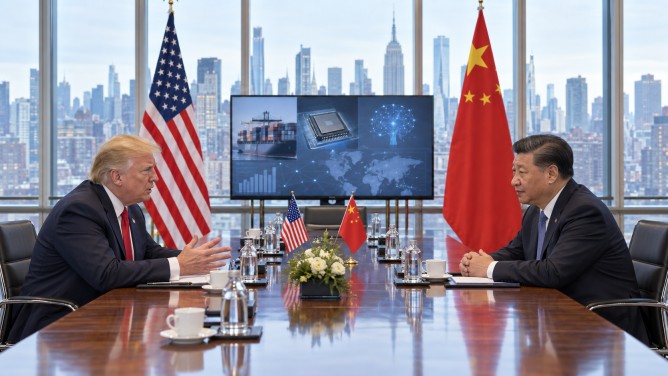
As the expiration of a tenuous trade truce looms in November, officials from the United States and China have engaged in discussions in New York, focusing on crucial issues such as trade, investment, and the burgeoning field of artificial intelligence. These talks are part of the groundwork being laid ahead of a planned meeting between U.S. President Donald Trump and Chinese President Xi Jinping.
Leading the negotiations were U.S. Treasury Secretary Scott Bessent and Chinese Vice Premier He Lifeng. The discussions are aimed at finding ways to mitigate existing trade barriers, notably tariffs and export restrictions that impact American energy and agricultural sectors. These efforts are integral as both nations strive to ease ongoing tensions between the world’s two largest economies.
The development of artificial intelligence has emerged as a significant point of contention between the two countries. U.S. officials and tech companies have voiced concerns about Chinese firms utilizing technology based on American models to advance their AI systems. In response, China has dismissed these claims and opposed any measures perceived as attempts to limit its AI industry. The bilateral talks aim to address these disagreements and explore methods to manage risks associated with AI development, while also seeking to prevent further technological decoupling.
The forthcoming summit between Trump and Xi is anticipated to tackle the broader scope of the economic and strategic relationship between the U.S. and China. This includes addressing trade restrictions, technology competition, and other areas of mutual interest. The outcomes of these high-level discussions may play a crucial role in shaping the future dynamics of U.S.-China relations.