
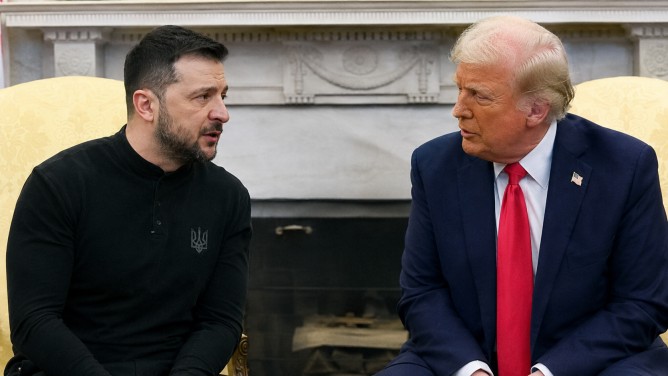
At the White House, U.S. President Donald Trump recently engaged in separate discussions with Ukrainian President Volodymyr Zelenskyy and Israeli Prime Minister Benjamin Netanyahu. Trump characterized both meetings as “very good” in subsequent social media posts, though he refrained from sharing specific details. The focus of the conversations with Zelenskyy was on enhancing Ukraine’s air defense capabilities. This included exploring potential licensing agreements that would enable Ukraine to produce interceptors for the Patriot missile systems. Zelenskyy also underscored the importance of revitalizing diplomatic efforts and expressed gratitude for the ongoing support from the United States.
Meanwhile, Netanyahu’s visit to Washington was primarily concerned with regional security issues. Key topics of discussion included Iran, developments in Lebanon, and strategies to expand the Abraham Accords. The timing of this meeting was notable due to recent tensions between Trump and Netanyahu, particularly regarding their differing approaches to Iran and broader Middle Eastern conflicts. Despite these differences, the dialogue underscored the critical nature of Washington’s involvement in addressing these security concerns.
Both meetings reflect the United States’ active role in two major international arenas: the conflict in Ukraine and the complex geopolitical dynamics of the Middle East. The discussions with Zelenskyy and Netanyahu highlight ongoing efforts to address pressing security challenges in these regions. For Ukraine, bolstering air defenses remains a key priority amid its ongoing conflict, while for Israel, navigating regional tensions and security threats is an ongoing concern.
President Zelenskyy’s remarks following his meeting with Trump indicated a strong focus on military cooperation, particularly in terms of air defense enhancements. The potential for Ukraine to manufacture parts for sophisticated defense systems represents a significant step in strengthening its military capabilities. Such developments are crucial as Ukraine continues to face external threats.
In the context of Netanyahu’s visit, the emphasis on Iran and the Abraham Accords suggests a strategic approach to regional diplomacy and security. The discussions also reflect a broader context of U.S. foreign policy interests in maintaining stability and fostering alliances in the Middle East. Both meetings serve as reminders of the complex global challenges that require sustained diplomatic engagement from the United States.